First Date Conversation: Questions, Follow-Ups and What to Save for Later
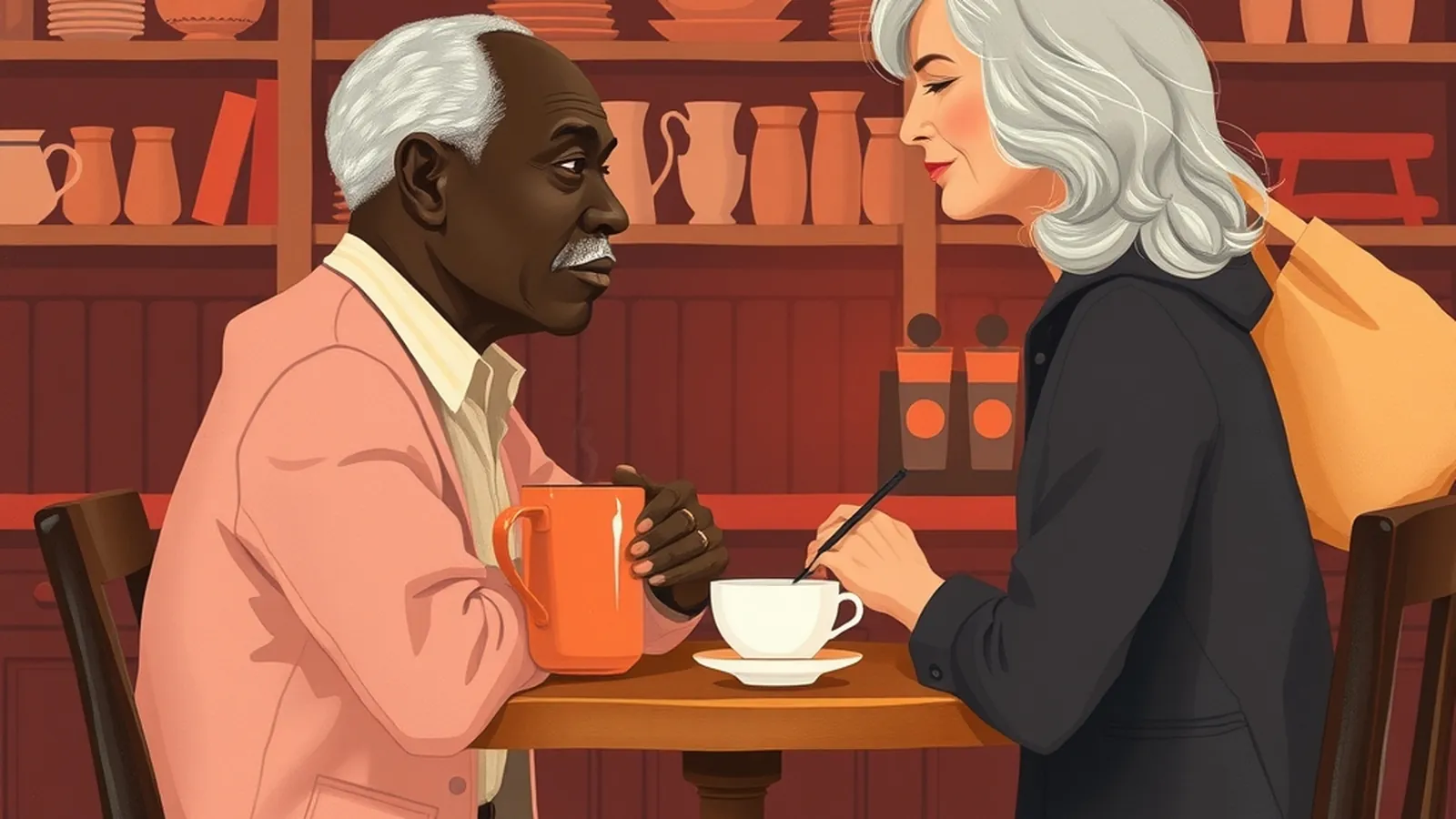
Good first date conversation starts with open, easy questions about everyday life, then follows up on whatever lights your date up. Try "What's been the best part of your week?" or "What do you do when you have a free Saturday?" Listen for a detail, ask about it, and share a little of your own story in return.
For more on this topic, browse the rest of our Texting & First Dates section. Below you'll find questions grouped by how personal they are, a simple follow-up method, the real story behind the famous 36 questions, and topics worth saving for later.
The goal: a conversation, not an interview
A first date isn't a quiz. If you fire off questions one after another, your date may feel like they're applying for a job. The aim is a back-and-forth where each of you learns something and both of you feel heard.
A useful rhythm is ask, listen, follow up, share. You ask one question. You listen to the whole answer. You ask about one detail in it. Then you offer something of your own that connects. That pattern turns a list of questions into an actual talk.
If you're still at the stage of chatting with someone you like and haven't set a date yet, our guide on how to talk to someone you like covers openers and reading comfort in person.
Questions to ask on a first date
Start light and let things get more personal only if the mood invites it.
Easy openers
- "What's been the highlight of your week so far?"
- "Are you a morning person, or does your day really start later?"
- "What's the best thing you've eaten lately?"
- "If you had a free afternoon tomorrow, what would you do with it?"
A little more personal
- "What's something you've gotten into in the last year or two?"
- "What does a good weekend look like for you?"
- "Who in your life makes you laugh the most?"
- "What's a place you've been that you still think about?"
When it's flowing and you both seem comfortable
- "What's something you're working toward right now?"
- "What's a small thing that makes a day feel good to you?"
- "What's something people often get wrong about you?"
Pick a few that suit you. A question you're curious about will always land better than one you memorized.
The follow-up method that makes talk feel easy
Most awkward pauses happen because a question got answered and nobody picked up a thread. Here's a worked example.
Sam asks: "What's something you've gotten into lately?"
Leo answers: "Rock climbing, actually. A friend dragged me to a gym and now I go twice a week."
Sam has several threads to pick up:
- Feeling: "Were you nervous the first time?"
- Detail: "Is it the kind with ropes or the short walls?"
- Person: "Is your friend still going, or did you outlast them?"
- Share: "I tried it once and got stuck halfway up. I respect anyone who goes back."
Any one of those keeps the talk going. Notice that the share isn't a competing story. It's a small, connected detail that gives Leo something to respond to.
What the 36 questions study really found
You may have heard about "36 questions to fall in love." Here's what the research actually showed.
In a 1997 study published in Personality and Social Psychology Bulletin, the psychologist Arthur Aron and colleagues paired up strangers and had them take turns asking a set of 36 questions over about 45 minutes. The questions started fairly light and grew more personal as they went. Pairs who did this reported feeling closer afterward than pairs who spent the same time making small talk.
That's an interesting finding, but it's easy to stretch too far. The study measured closeness, not love. It didn't show that the questions make anyone fall for anyone. The questions became famous after Mandy Len Catron wrote about trying them in a 2015 New York Times "Modern Love" essay, and the "fall in love" framing stuck.
What you can take from it
The useful lesson is about pacing. Closeness grew when both people opened up gradually and took turns. That matches what many relationship therapists recommend for early dates: share a little, let the other person share a little, and go deeper only as comfort grows.
What you shouldn't do is pull out a list of very personal questions on a first date and push through them. Personal questions feel good when both people choose to answer. They feel intrusive when one person is steering. If your date gives a short answer or changes the subject, that's a signal to go lighter.
Topics to save for later
You don't need to hide who you are. Some subjects go better once trust has had time to build.
| Save for later | Why | Lighter version for now |
|---|---|---|
| Detailed stories about exes | Can feel like comparison | "I've been single a while and I'm open to something real." |
| Money troubles | Heavy for a first meeting | "I'm working on saving for a trip." |
| Big family conflict | Hard to explain briefly | "My family's a lot. I'll tell you the saga sometime." |
| Marriage and kids timelines | Puts pressure on a stranger | "I'm looking for something long-term." |
| Your full medical history | Private, and not needed yet | Share what you're comfortable sharing |
If your date brings one of these up, you don't have to shut it down. Listen kindly. You can also say, "That sounds like a lot. I'm happy to hear more once we know each other better."
When the conversation stalls
Every conversation has quiet spots, even good ones. A pause isn't a failure. Try one of these:
- Comment on something around you: the music, the food, the view.
- Go back to an earlier thread: "Wait, you never told me how the climbing gym story ended."
- Be honest: "I'm a little nervous, so forgive me if I'm talking too fast."
Choosing the right setting helps too. Activity dates give you things to talk about, so our first date ideas list marks which plans make conversation easiest. For nerves, phones and how to end the evening, see our first date tips.
Keeping the conversation going after the date
The threads you picked up on the date give you easy material later. If Leo mentioned a climbing competition, Sam might text, "Good luck at the climbing thing Saturday." Our guide on how to text someone you like has more ways to keep texting balanced and natural.
Try this before your next date
- Pick three questions from the lists above that you'd honestly like answered.
- For each, think of one small thing you could share in return.
- On the date, listen for one detail per answer and ask about it.
- Notice your date's comfort. Go deeper only if they're leaning in too.
Good conversation won't guarantee a second date, but it will make the time you spend together feel real. That's worth more than any perfect question.
Curious about a dating or relationship course?
Some people like the structure of a paid course. This button opens a third-party dating or relationship program from one of our advertising partners. Its claims are its own, not ours, so weigh them against our red flags checklist.
See the partner program →We may be paid when you click. The program shown can change. Read its terms before you buy anything. How this works
Frequently asked questions
What are good questions to ask on a first date?
Open questions about everyday life work best: "What's something you're looking forward to this month?" or "How did you get into your line of work?" They're easy to answer and lead naturally to follow-ups.
Do the 36 questions make you fall in love?
No. In Arthur Aron's 1997 study, strangers who took turns asking 36 increasingly personal questions reported feeling closer than pairs who made small talk. The study measured closeness, not love, and it can't make anyone fall for anyone.
What should you not talk about on a first date?
It's usually wise to save detailed stories about exes, money troubles, heavy family conflict and big future plans like marriage or kids for later dates. You don't have to hide who you are, only let trust build before going deep.