Meeting the Parents: A Calm, Practical Guide
The right time to meet your partner's parents is when you're both committed enough that the meeting means something, and both of you actually want it. To prepare, ask your partner about the family ahead of time, bring a small thank-you if it fits their customs, ask questions, and focus on being kind rather than impressive. Most parents aren't looking for a perfect partner. They're hoping to see someone who treats their kid well.
This guide is part of our Commitment & Love section, where we cover the moments that turn dating into a shared life.
When it makes sense
There's no fixed rule. Some people introduce a partner to their family within weeks because they're close and the family is relaxed. Others wait a year because their family is far away, intense or not yet aware of who they're dating. Both can be fine.
A few signals that it's a good time:
- You've agreed to be exclusive and you're both thinking long term.
- Your partner brings it up, or seems pleased when you do.
- There's a natural occasion, like a birthday dinner or a holiday, that isn't too high-pressure.
Meeting family often happens around the same time as other big steps. Our guide to relationship milestones explains why couples hit these in different orders and why that's okay. Some people wait until after they've said "I love you", while others meet the family first and let that conversation come later.
A note on family situations
Not every family meeting is simple. Your partner may have divorced parents who shouldn't share a table, a strained relationship with one parent, or family members who don't know they date people of the same gender. Some families hold strong cultural or religious expectations about dating.
Follow your partner's lead. Never push someone to introduce you, or to come out to family, before they're ready. For some people that conversation could cost them support, housing or safety, and it's their choice to make. Your job is to be patient and on their side.
Ten questions to ask your partner first
A short, relaxed conversation beforehand saves a lot of guesswork. Try asking:
- What are your parents' names, and what should I call them?
- How much do they know about me already?
- Any topics to avoid, like politics, an old family feud or a sibling's divorce?
- Anything I should know about food, drinks or customs at the table?
- Do they hug, shake hands, or neither?
- What are they proud of, or love to talk about?
- Should I bring something? What would they like?
- How long are we staying, and what's our signal if one of us needs a break?
- Is there anything you're nervous about?
- How would you like me to handle it if someone asks a pointed question?
That last question matters. If an aunt asks when you're getting married, it helps to know whether your partner wants you to laugh it off or let them answer.
What to wear
Dress one notch nicer than you would for a casual date, matched to the setting. A backyard barbecue calls for something different than a holiday dinner. Clean, comfortable and a little effort is the goal. If you're unsure, ask your partner what the family usually wears. Our guide on what to wear on a first date has more on dressing in a way that feels like you, and the same idea applies here: you want to be comfortable enough to forget about your clothes.
What to bring
In many families a small gift is a nice touch. Good options include flowers, a dessert from a local bakery, a plant, or something from your hometown. Skip anything expensive or personal. If the family doesn't drink, don't bring wine. Your partner will know.
What to say at the table
You don't need to be dazzling. You need to be curious and kind. A few easy lines:
- On arrival: "Thank you so much for having me. It's really nice to meet you."
- Opening a conversation: "Sam tells me you're the one who taught him to fish. Is that true?"
- Showing interest: "How did the two of you meet?" Parents often love this question.
- Complimenting: "This is delicious. Is it a family recipe?"
- On leaving: "Thank you for a lovely evening. I hope we can do this again."
Ask follow-up questions and listen to the answers. Offer to help clear the table or carry dishes. Put your phone away.
Topics to keep light the first time: politics, money, past relationships, your sex life and anything your partner flagged. If someone brings up a touchy subject, a calm "That's interesting, I haven't thought about it that way" can move things along.
Handling awkward moments
Something will probably go slightly wrong. Maybe you knock over a glass, forget a name or a joke falls flat. That's normal. A quick "Sorry about that" and a smile is enough. People remember warmth more than small mistakes.
If a parent asks something intrusive ("So what do you make a year?"), it's fine to deflect politely: "I work in logistics and I really enjoy it." You don't owe anyone personal details on a first meeting.
If a family member is openly rude or disrespectful, especially about your race, religion, gender or who you love, you don't have to sit and take it. Excuse yourself for a moment and use the signal you agreed on with your partner. Afterward, talk honestly about how it felt and what support you need next time.
A worked example
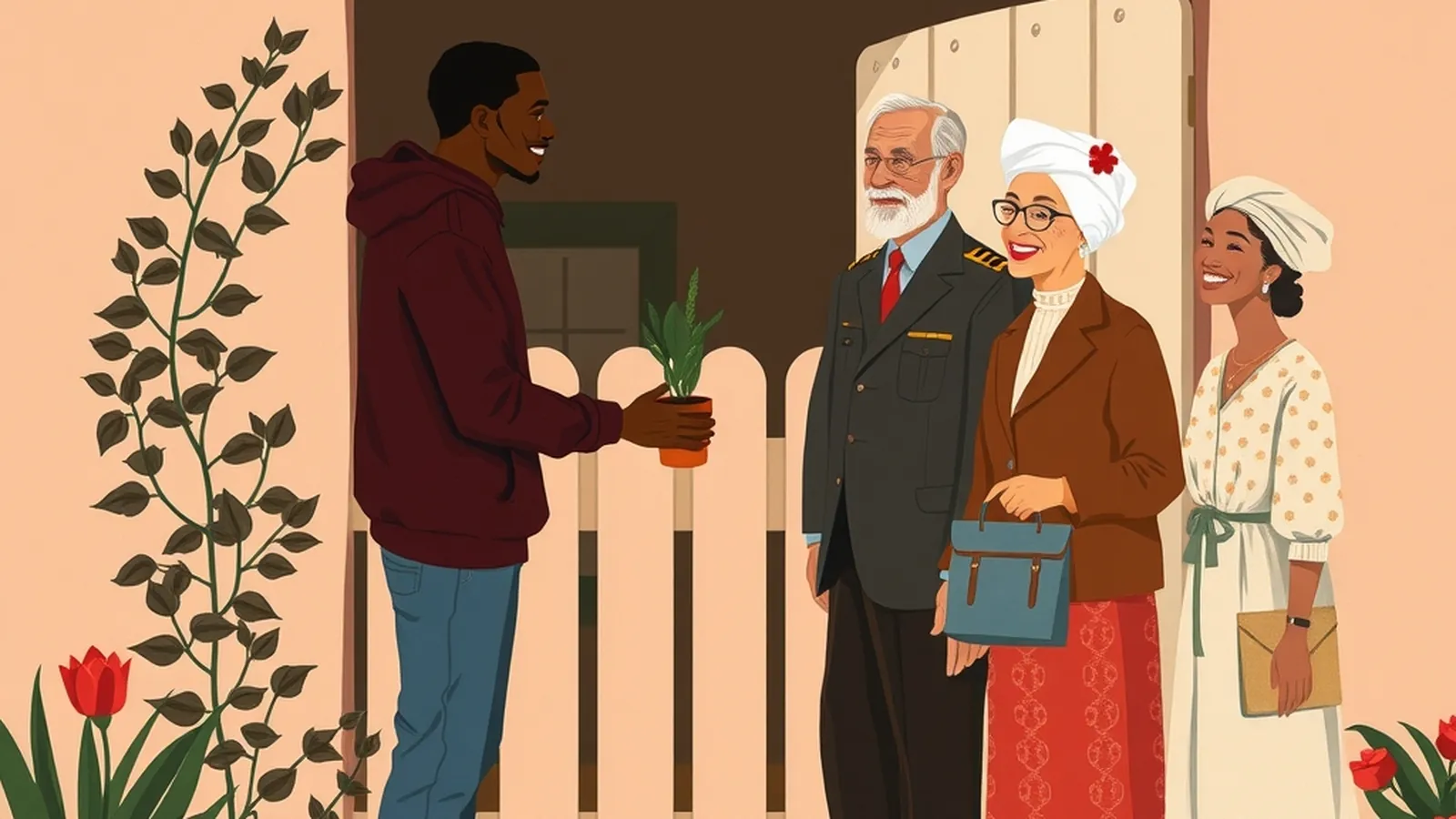
Andre is meeting his girlfriend Lena's parents for her mother's birthday. Beforehand, Lena tells him her dad loves gardening, her mom hates talk about work, and her grandmother speaks mostly Polish. Andre brings a small potted herb for her dad's garden, learns how to say "nice to meet you" in Polish, and asks her mom about her favorite birthday ever. The grandmother laughs at his accent and corrects him. It becomes the story of the night.
After the visit
On the way home, check in: "How do you think that went? Anything I should know for next time?" Don't overanalyze every comment. First meetings are often stiff for everyone, including the parents.
If it's your parents meeting your partner, thank your partner for coming and share anything nice your family said. If things went badly, protect your partner from harsh comments rather than passing them along word for word.
Looking ahead
Meeting family is often part of a bigger shift toward building a life together. If you're starting to talk about sharing a home, our guide to moving in together covers the conversations about money, space and chores that help that step go smoothly.
Your prep checklist
- Ask your partner the key questions above.
- Learn names and how to address everyone.
- Choose an outfit that fits the setting.
- Pick up a small, appropriate gift.
- Agree on a "need a break" signal.
- Prepare two or three easy questions to ask.
- Plan a short check-in with your partner afterward.
Go in curious, be yourself on your best manners, and remember that you and your partner are a team. That matters far more than any single dinner.
Curious about a dating or relationship course?
Some people like the structure of a paid course. This button opens a third-party dating or relationship program from one of our advertising partners. Its claims are its own, not ours, so weigh them against our red flags checklist.
See the partner program →We may be paid when you click. The program shown can change. Read its terms before you buy anything. How this works
Frequently asked questions
When should you meet your partner's parents?
There's no set timeline. Many couples do it once they're exclusive and see a future together, often a few months in, but family closeness, distance and culture all shift the timing. The right moment is when you both feel ready.
What should I bring when meeting the parents?
A small, thoughtful gift is a kind gesture in many families, such as flowers, a dessert or something from your hometown. Ask your partner first, since some families have customs or dietary rules worth knowing.
What if my partner's parents don't like me?
One visit rarely decides how a family feels. Stay polite, keep showing up kindly, and talk with your partner about how they want to handle it. Their support matters more than winning anyone over quickly.