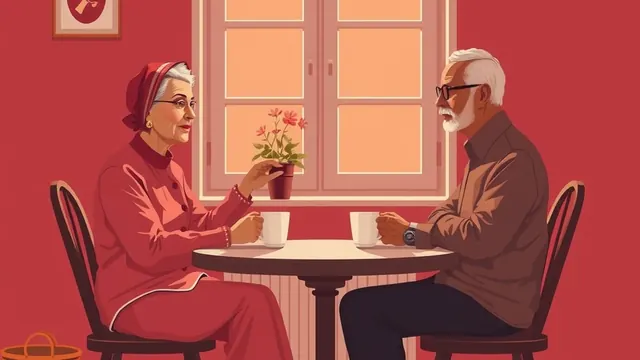
Emotional Intimacy: How to Feel Truly Close

Emotional intimacy is the sense that your partner really knows you, including your worries, hopes and odd little habits, and accepts you anyway. You build it by sharing honest things in small steps, listening well when your partner does the same, and responding with care instead of judgment. It grows slowly, through ordinary conversations more than grand moments.
This guide is part of our Commitment & Love section, which covers how relationships deepen and stay healthy over time.
What emotional intimacy looks like
It's easy to picture intimacy as long, tearful talks at midnight. Those happen, but most closeness looks quieter:
- Telling your partner you're nervous about a doctor's appointment, and having them ask about it later.
- Admitting you felt left out at a party without being told you're overreacting.
- Laughing about an embarrassing childhood story you've never told anyone.
- Sitting together in silence after a hard day and feeling better for it.
Emotional closeness is one of several kinds of connection. Physical attraction, shared interests and admiring how someone looks are different things, and couples can be strong in one area and thinner in another. Our guide to types of attraction explains how emotional, romantic and physical attraction differ.
Signs it might be missing
Plenty of couples love each other and still drift into a surface-level routine. A few clues:
- Most conversations are about schedules, chores, kids or money.
- You'd tell a friend about something that's bothering you before you'd tell your partner.
- You feel lonely even when you're together.
- You don't know what your partner is worried about right now.
- Sharing feelings tends to start an argument, so you've both stopped.
None of this means the relationship is doomed. It usually means life got busy and the habits of sharing slipped. They can come back.
Why opening up feels risky
Being known means being seen at your less polished moments. If you grew up in a family that brushed feelings aside, or a past partner used something you shared against you, holding back makes sense. Your nervous system is trying to protect you.
Closeness grows when it feels safe. That's why how your partner responds matters as much as what you share. Each time someone opens up and is met with kindness, it gets easier to share the next thing.
How to build it: start small
There's a well-known study in which strangers grew closer by asking each other a series of increasingly personal questions. The key idea is that closeness grows step by step, with both people taking turns. Our guide to first date conversation covers that study in depth. Long-term couples can use the same principle.
Try this question ladder, one rung at a time, over a few weeks:
Light:
- "What's something that made you laugh this week?"
- "What's a small thing you're looking forward to?"
Middle:
- "What's been on your mind lately that you haven't said out loud?"
- "When did you feel most proud of yourself this year?"
Deeper:
- "What's a fear you carry that I might not know about?"
- "Is there something from your past you wish I understood better?"
- "When do you feel most loved by me, and when do you feel most alone?"
Answer the questions yourself too. Intimacy is a two-way street, and if only one person shares, it starts to feel like an interview.
How to respond when your partner opens up
This is where intimacy is won or lost. When your partner shares something vulnerable:
- Stop what you're doing. Put the phone down and turn toward them.
- Reflect what you heard. "So you've been feeling invisible at work lately."
- Validate the feeling. "That sounds exhausting." You don't have to agree with every detail to accept the feeling.
- Ask before advising. "Do you want ideas, or do you mostly want me to listen?"
- Thank them. "Thank you for telling me. I'm glad you did."
Things that shut sharing down: jokes at the wrong time, "You're too sensitive," turning the topic to yourself, or bringing it up later during a fight. If you've done any of these, a sincere apology helps rebuild trust.
Learning to talk and listen this way is a skill like any other. Our guide to communication in relationships goes into everyday habits for clearer, kinder conversations.
A worked example
Kenji and Marcus have been together six years. They're good at logistics but haven't talked about anything deep in months. One night, Marcus asks, "What's been on your mind that you haven't said?" Kenji pauses, then admits he's been scared about his mother's health and didn't want to burden Marcus. Marcus doesn't jump to solutions. He says, "I wish I'd known. I want to carry that with you." They talk for an hour. The next week, Kenji brings it up on his own.
When your partner struggles
Sometimes emotional closeness gets tested by something heavy: grief, job loss, illness or a long stretch of stress. Being close during those times matters a lot, and so does looking after yourself. Our guide on supporting a partner covers what helps and how to avoid burning out.
Intimacy and love
Many people find that emotional closeness is what turns a strong attraction into lasting love. If you're wondering whether that's happening for you, our guide on how to know if you're in love looks at the signs that go deeper than butterflies.
If one or both of you find it very hard to open up, especially because of past hurt, a licensed therapist, individually or as a couple, can help you build that safety.
Try this today
- Share one small true thing you haven't mentioned, like a worry, a hope or a memory.
- Ask your partner one question from the "middle" rung above.
- When they answer, reflect back what you heard before saying anything else.
- Thank them for telling you.
Ten minutes a day of real attention does more for closeness than one big weekend away.
Curious about a dating or relationship course?
Some people like the structure of a paid course. This button opens a third-party dating or relationship program from one of our advertising partners. Its claims are its own, not ours, so weigh them against our red flags checklist.
See the partner program →We may be paid when you click. The program shown can change. Read its terms before you buy anything. How this works
Frequently asked questions
What is emotional intimacy in a relationship?
Emotional intimacy is the feeling of being known, understood and accepted by your partner. It grows when both people share honest thoughts and feelings and respond to each other with care rather than judgment.
Can you have a relationship without emotional intimacy?
You can, but it often feels lonely or shallow over time, even when the practical side works well. Many couples who feel like roommates are missing emotional closeness rather than love.
How do you build emotional intimacy with your partner?
Share small, true things about yourself, ask curious questions, listen without fixing, and respond kindly when your partner opens up. Closeness grows in small steps repeated over time, not in one big conversation.